For almost 250 years, every president of the U.S. has been a man. Yet today, there are female governors, senators, justices, and even a vice president. As more and more women enter the political arena, many Americans are asking an important question: Is the U.S. finally ready to elect a female president?
The progress women have made in U.S. politics is clear. In 2016, Hillary Clinton won the popular vote by nearly 3 million votes. Moreover, in 2021, Kamala Harris was elected as the first Black and South Asian American woman to serve as vice president. Now, women make up about one third of Congress, a dramatic increase compared to previous decades.
Countries around the world have already shown that women can successfully hold positions of leadership at the highest level of government. Nations such as Germany, India, and the United Kingdom have elected female leaders, proving that women are more than capable of effectively managing national crises, economic issues, and foreign policy.
Despite this progress, a different standard is still applied to female candidates than to their male counterparts. For men, they are often praised for their assertiveness and confidence, while women who show the same qualities are labeled as “too emotional” or “too aggressive.” Female politicians also face greater scrutiny for their looks, voice, clothing, or personality.
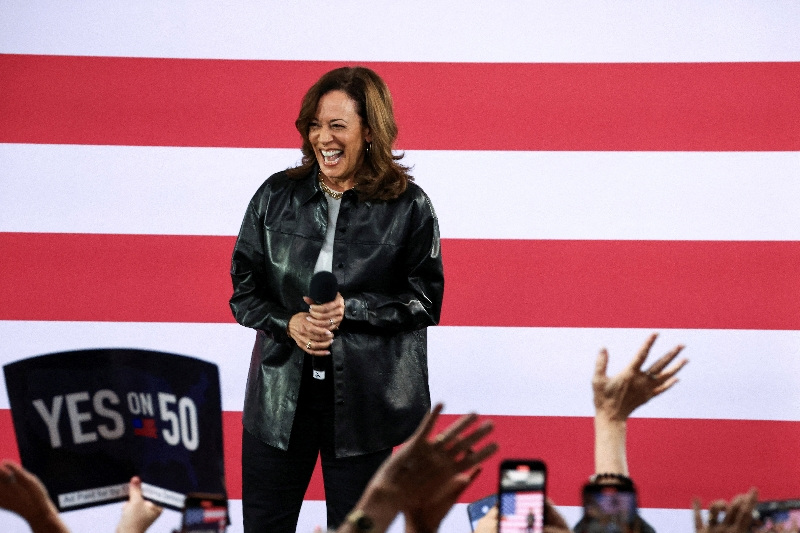
For instance, Harris often faced intense criticism that targeted her personality, voice, and looks rather than her policies. Harris’s signature laugh and speaking tone were criticized as “nervous” and “inappropriate,” using it to question her seriousness and ability as a leader.
However, such intense criticism may change as younger generations tend to be more accepting of women in leadership than previous generations. Since they are constantly exposed to women in political positions or executive power in other professions, the idea of a female president may not appear as shocking or revolutionary as it may to older generations.
Though America has yet to elect a female president, it may be closer than it has ever been. As social attitudes continue to evolve and more women are entering politics, whether the first female president comes in 2028 or later is only a matter of time. For instance, Hillary Clinton, a female candidate who is widely known in the political arena, has strong debate and campaign skills, and demonstrated deep political expertise may emerge as a viable option for the presidential seat.
Perhaps, the true question may no longer be whether America is ready for a female president, but when they will finally acknowledge that gender shouldn’t matter at all in politics.