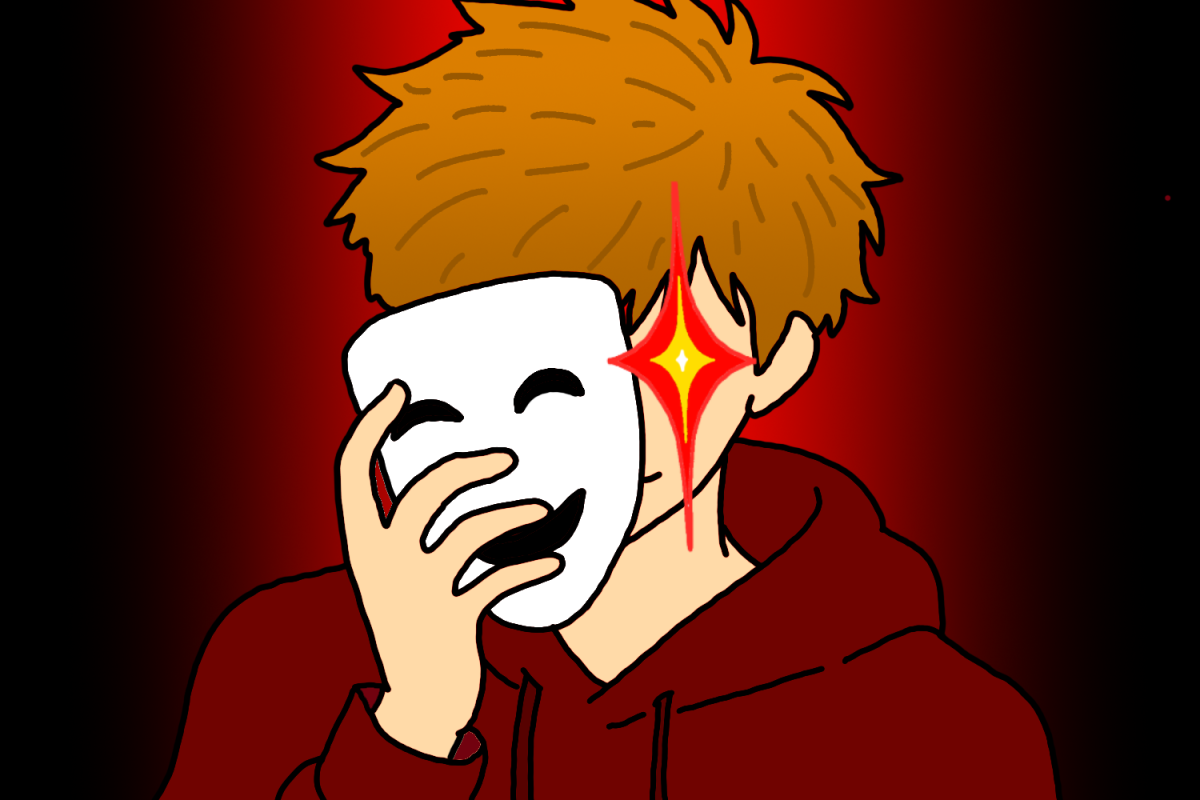
The idea of being cringe has been a phenomenon since the early 2000s, originally meaning to be awkward, embarrassing, or uncool. Some of the most popular media now was originally seen as embarrassing—some examples being Five Nights at Freddy’s and Danganropa. A lot of people feel that their interests should belong to original fans only, but prohibiting new fans from enjoying media alongside others is unjustified and can create an unwelcoming environment.
Self-humiliation has become widespread across platforms such as TikTok. Creators will film videos making silly faces and lip syncing to “cringe” audios, a lot of them being clips from anime or old songs that are considered outdated now. These videos don’t receive as much hate as they would in the past, and many even go viral.
“I don’t feel worried about being judged online because I don’t really care about other people’s opinions online. I think it’s fun to do weird stuff online, plus, I make friends with other content creators,” freshman Leonardo Kubata said. This year, his platform on TikTok shot up to 43,000 followers.
The anime My Hero Academia was notoriously known as a cringe show, and became mainstream in 2020.
Now, the anime is less popular, but some fans still remain today. The stigma surrounding the show dissipated, and some people even pretend to like it—a phenomenon many are calling “LARPing.”
Originally, LARPing—Live Action Role Playing—meant to dress up as a character and act out scenes as them. The slang now commonly means to pretend to be someone you aren’t, such as faking your interest in something.
The term has become derogatory, used to call out people who pretend to like “niche” media in order to seem cool and fit in.
“Sometimes people say that I have ‘popular girl humor,’ and I get protective over my interests because I’ve liked these things for a long time,” freshman Amelie Mamaril said.
A new form of videos have become popular on TikTok, where users type out rants and use text to speech to read it out loud. Topics can range from political opinions to game and show reviews. Typically, a sprite is used—a character from a video game or TV show—to represent the creator. Sometimes slime or clay cracking videos are played in the background alongside the sprite.
The use of sprites that a person doesn’t know about has become a controversial topic among the community. Some demand that the creator engages with the media before using a character as a sprite, and others think it’s okay to use whatever character they want. Personally, I believe that it’s okay to use any sprite as long as it’s appropriate and the creator enjoys their visual or personality.
Originally “cringe” media becoming popular has stirred up interesting controversy among communities. It’s become more difficult to differentiate true fans from the posers, but the popularity expands the community and opens new opportunities for old and new fans of “cringe” media alike. We should open communities to all fans—new and old—so that everybody can enjoy their interests together.