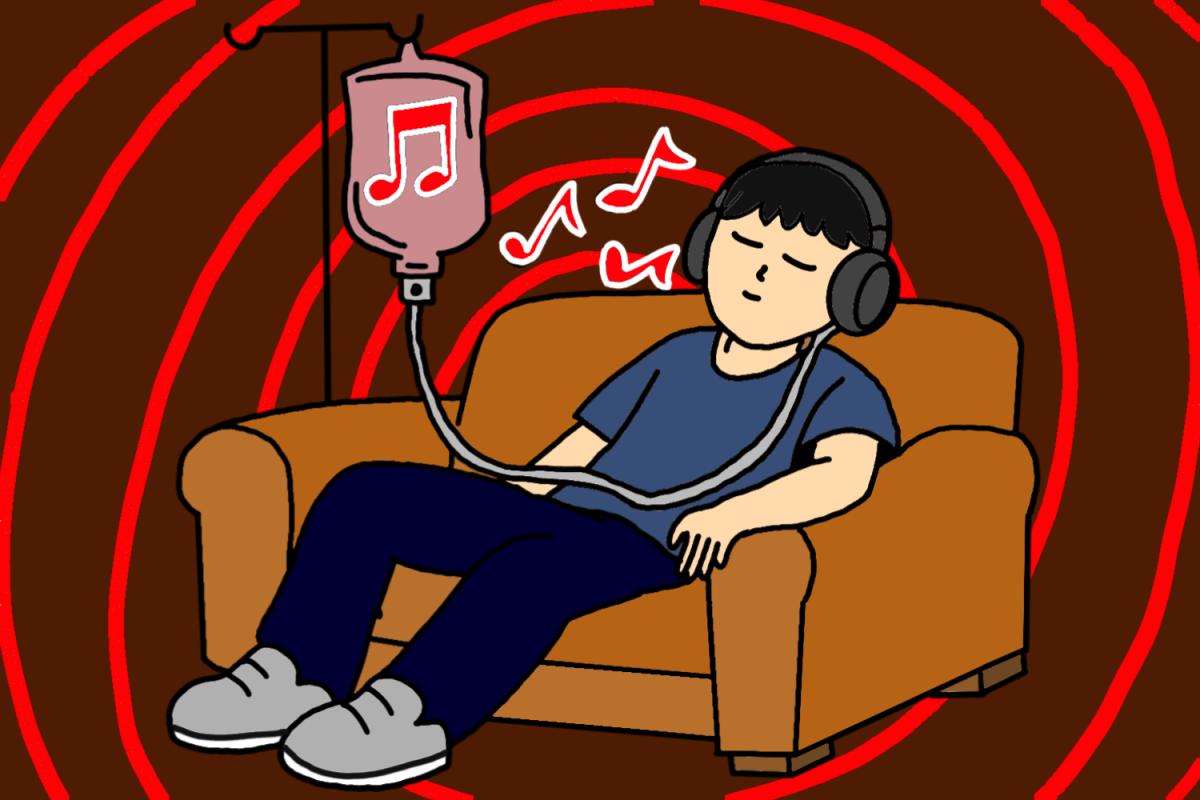
Music is much more than entertainment; it’s a constant backdrop to teenage life. If you walk through the hallways at school, you can find students with headphones or AirPods in nearly every corner, seemingly inseparable from these devices. While music can offer an uplift in mood and stress relief, teenagers have become too dependent on it.
There is no doubt that music plays an important role in adolescent lives. A study shows that 82% of teens listen to music every day, with an average of two hours a day, more than any other media activity. Music triggers brain responses linked to positive emotions and relaxation, helping people cope with stress and regulate their mood. Listening to favorite songs can help teens feel calmer and less overwhelmed, especially during stressful and long hours at school.
“I usually listen to music two to three hours a day, especially artists like Clairo and beabadoobee,” said sophomore Vincent Tan. “Their songs are really honest and emotional, and it really helps to hear something that matches how I’m feeling.”
A major issue with constant music use, however, is that it can be distracting. Studies have shown that listening to music with lyrics can make it harder to focus on schoolwork or tasks.
“I think students wearing headphones through the halls is okay, but inside classrooms it’s not,” said Mr. Andrew Mendoza, a math teacher at Arcadia High School.
Researchers from Rutgers University showed that while listening to music can be helpful for straightforward and repetitive tasks, it hurts when a task requires a person’s full attention.
There are also health risks related to constant music exposure. The World Health Organization has stated that over a billion people aged 12-years-old to 35-years-old are at risk of losing their hearing due to prolonged and excessive exposure to loud music through earbuds and loud environments. Many teens listen to music at high volumes without realizing the long-term damage it can have. Early hearing loss and ringing in the ears are becoming more common among young people.
Companies like Apple Music and Spotify continuously enhance their products to convince teens to listen longer. Personalized playlists, recaps, and algorithm recommendations make it easier to have music on repeat.
Music can also affect social interactions. Jamming along to music is like being stuck in a shell, where people are absorbed into the sound and temporarily disconnected from the real world. Face-to-face communication is still key to building friendships and learning social skills. Constant use of headphones to block out the environment can signal to others that they are disconnected.
The difference between enjoying music and relying on it is crucial. Music should enhance life. Learning how to balance music with attention can help teens live healthier and more productive lives.