In this fast-evolving world of cryptocurrency, Meme-Coins have captured enormous attention. Named after viral internet jokes or cultural references—like Dogecoin, Shiba Inu, and Pepe the Frog—these tokens are marketed as fun, community-driven investments. While they may seem harmless and exciting, meme coins are scams designed to trick inexperienced investors out of their money.
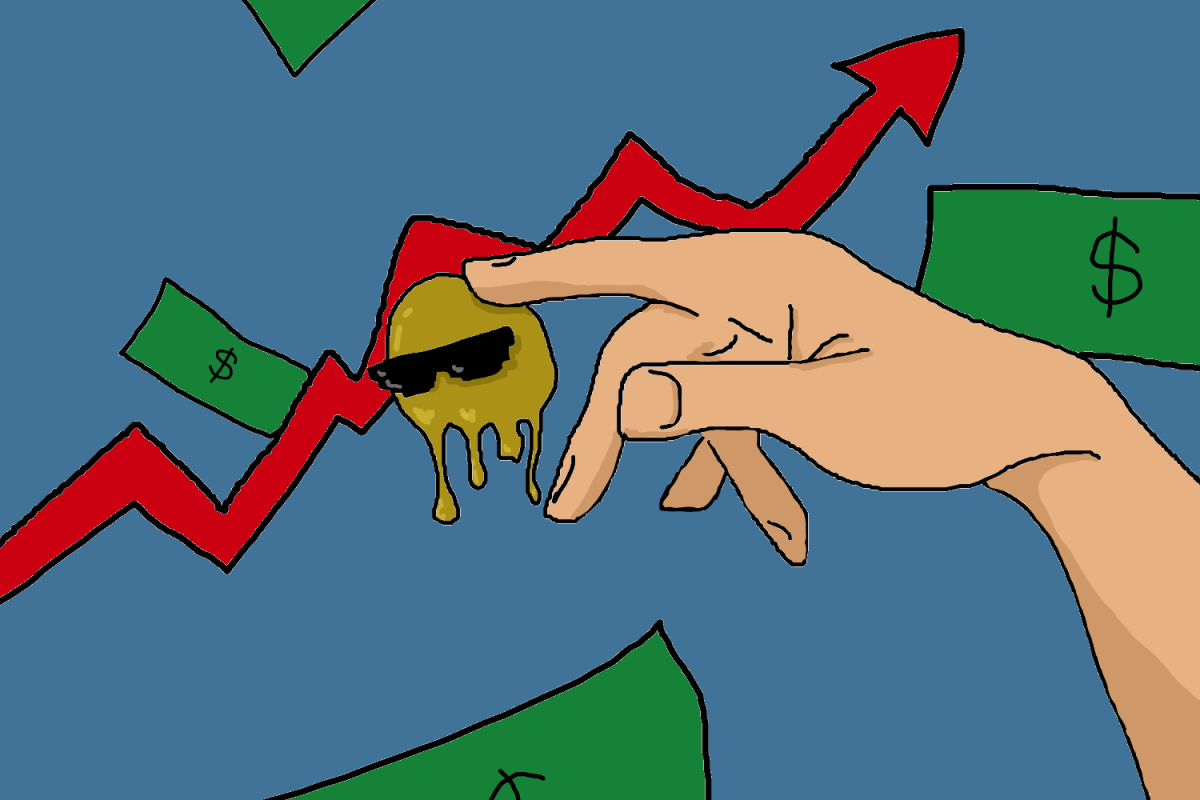
A clear example of this is the Hawk Tuah Coin, which was launched in late 2024 by the “Hawk Tuah Girl,” Haliey Welch. The token skyrocketed to nearly $500 million in market value and within a few hours, it lost over 90% of its value as insiders sold their tokens. Investigations found out that 96% of the coin supply was owned by less than 10 wallets before launch, suggesting a “pump and dump” scheme. A pump and dump is a market manipulation tactic where the value of a coin is inflated to attract participants and then sold off, causing it to crash. Welch herself said that she had little to do with the project beyond being paid for promoting, revealing how influencers can unintentionally lend legitimacy to risky and dangerous tokens. Meme Coins like Hawk Tuah are designed to go to zero and are only created to exploit viral fame rather than provide lasting value.
Another example is the 6-7 coin, promoted through a website called 67coin.club. It has a “very low trust rating” with hidden ownership and a lack of transparency. These factors are very risky, since if the token crashes, no one would be held accountable. Despite its flashy marketing on social media and its website, no verifiable team or technical document states the purpose of the coin, basic necessities for simple crypto projects. This shows how scammers use newly registered domains and trendy branding to lure buyers into worthless investments.
Some supporters argue that not all meme coins are scams, like Dogecoin. Originally created in 2013 as a joke, Dogecoin gained popularity due to its friendly community and endorsement from figures like Elon Musk. Unlike these new short-lived coins, Doge has maintained an active developer base and was accepted by some companies for limited payments. While Dogecoin helped introduce millions of people into cryptocurrency, the success is an exception. The price still heavily relies on celebrity marketing and market hype rather than utility. While Dogecoin may have avoided being an outright scam, its success doesn’t guarantee that newer coins will follow its path.
Meme Coins usually lack real utility or financial banking. Their prices are dependent on social media rather than actual demand or technology. These coins have been compared to “collectibles” with “limited or no use of functionality,” which means they only exist for speculation rather than innovation. Once the hype fades, these coins never see the light of day again, leaving buyers with an empty wallet and massive losses.
Meme coins function as cleverly disguised scams. The Hawk Tuah and 67 cases demonstrate how fame, marketing, and the fear of missing out can combine to fool ordinary investors. If a coin’s only selling point is a joke or meme, it’s probably no laughing matter when your money disappears.